How to Help a Friend Who Is Addicted to Drugs: A Practical, Compassionate Guide
How to Help a Friend Who Is Addicted to Drugs
Watching a close friend navigate drug addiction is emotionally heavy, leaving many feeling helpless, scared, or unsure of what to say. Addiction is a complex chronic health condition, not a personal flaw or lack of willpower. First and foremost, understanding that you cannot force someone to change—but can offer a clear, supportive path forward—is key to helping them recover.
Below, you will find a step-by-step approach to navigating this challenging journey while keeping both your friend’s safety and your personal well-being intact.
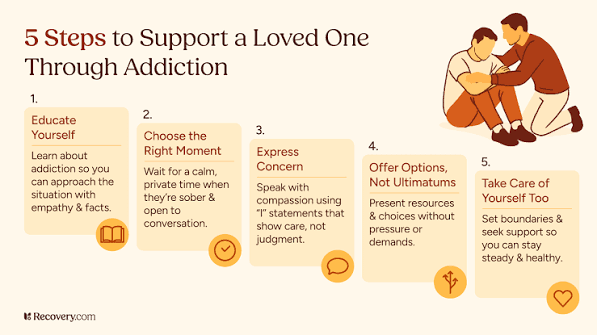
1. Educate Yourself on Substance Use Disorder
Before initiating a conversation, take time to understand substance use disorder (SUD) and how it affects behavior.
-
Understand the Science: Learning how substances alter brain chemistry helps reframe addiction as a health issue rather than a moral failure.
-
Recognize the Warning Signs: Look out for significant behavioral changes, financial distress, physical decline, or changes in social circles.
-
Research Available Resources: Additionally, look into reputable treatment centers, therapists, and support groups ahead of time so you have immediate options ready when your friend expresses a desire for help.
2. Approach the Conversation with Compassion
Once you feel prepared, plan a thoughtful, private discussion. However, timing and tone are critical to avoid defensiveness.
-
Choose the Right Moment: Speak privately in a calm environment when your friend is completely sober.
-
Use “I” Statements: Frame concerns around your personal feelings rather than accusations. For example, say “I feel worried about your health lately” instead of “You are ruining your life.”
-
Listen Without Judgment: In fact, defensive reactions are a natural response when someone feels cornered. Keep your tone gentle, calm, and rooted in empathy.
3. Establish and Maintain Healthy Boundaries
Supporting a friend does not mean enabling destructive behavior or putting your own life on hold. Therefore, setting clear limits is essential for both parties.
| Healthy Support | Unhealthy Enabling |
| Offering to drive them to a therapy appointment | Giving them cash or paying off debts |
| Being available to talk when they are sober | Making excuses for their missed work or obligations |
| Helping them research rehab options | Lying to family or employers on their behalf |
| Maintaining your own mental health limits | Sacrificing your finances or well-being |
4. Connect Them with Professional Care
Long-term recovery almost always requires medical or psychological interventions. To assist with this process, take on the administrative burden that might feel overwhelming to them.
-
Explore Treatment Options: Help look into medical detox programs, outpatient therapy, residential rehab, or peer-led groups like Narcotics Anonymous (NA) or SMART Recovery.
-
Assist with Logistics: Offer to make calls, organize transportation, or sit in the waiting room for moral support during initial appointments.
-
Prioritize Safety: In case of an emergency, keep Naloxone (Narcan) accessible if opioid misuse is suspected, as it can temporarily reverse an overdose.
5. Prioritize Your Own Well-Being
Ultimately, you cannot pour from an empty cup. Supporting someone through substance misuse can lead to emotional exhaustion if you do not protect your own mental energy.
-
Join Support Networks: Consider organizations like Al-Anon, Nar-Anon, or SMART Recovery Family & Friends designed specifically for loved ones.
-
Seek Personal Therapy: Speaking with a counselor can help you process grief, maintain boundaries, and prevent burnout.
Global Crisis Resources
-
United States: SAMHSA’s National Helpline (1-800-662-4357) | Call/Text 988
-
United Kingdom: Frank Helpline (0300 123 6600) | NHS Addiction Services
-
Canada: Wellness Together Canada (1-866-585-0445) | Call/Text 988
-
International: Contact local emergency services (911, 999, 112) immediately in cases of suspected overdose.